
India
India - Commemorative Stamps of 1964
1964
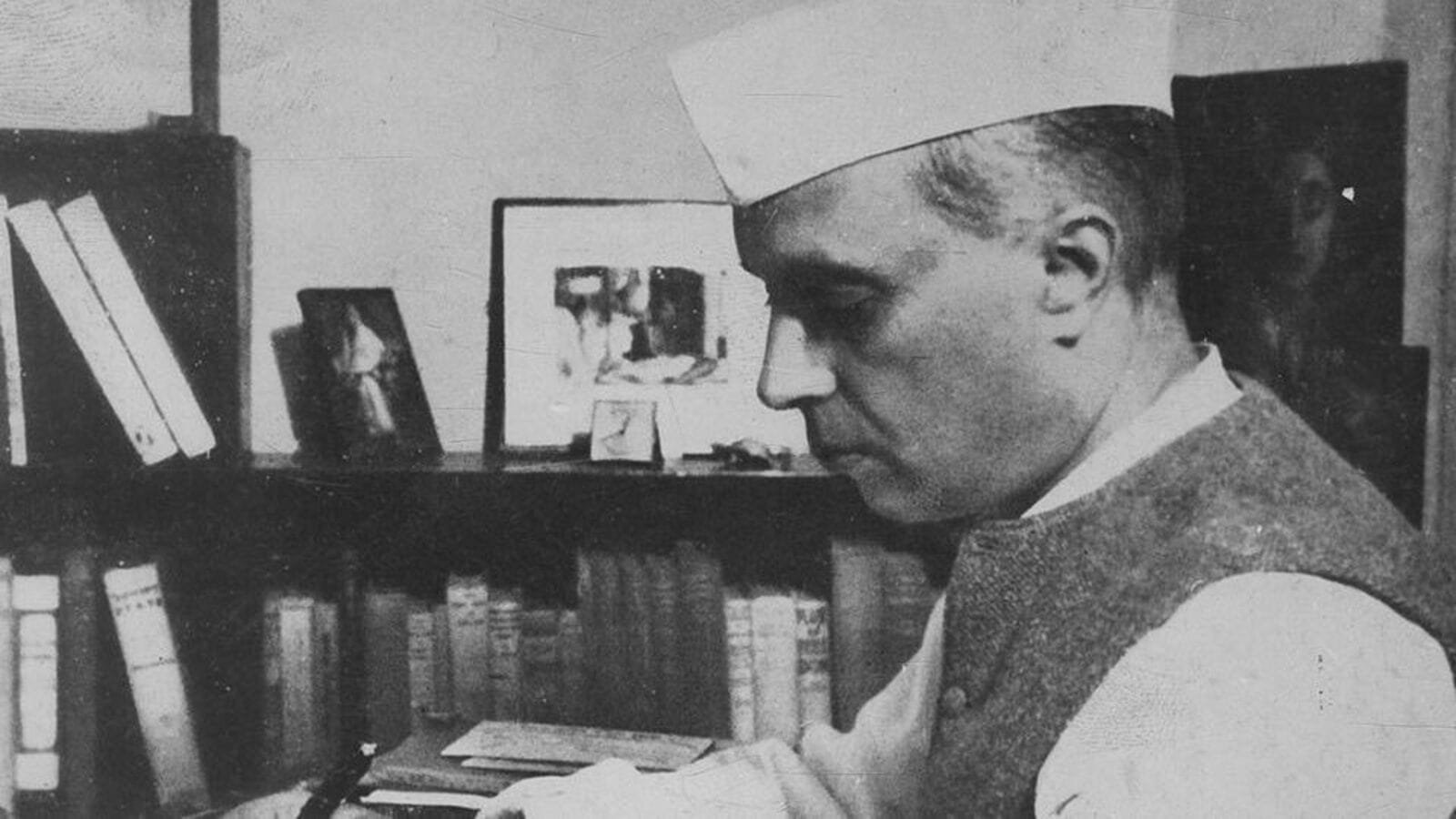
The year 1964 marked a moment of transition and uncertainty in India, as the nation confronted the loss of its first Prime Minister, Jawaharlal Nehru, who died on 27 May after nearly seventeen years in office. Nehru’s death created a leadership vacuum within the ruling Indian National Congress and prompted a carefully managed succession. Lal Bahadur Shastri emerged as a consensus candidate and assumed office in June, signaling continuity in governance but also a shift toward a more modest and pragmatic leadership style.
Politically, India remained committed to parliamentary democracy, though the year underscored the importance of institutional resilience in the absence of a dominant leader. The Congress party retained its central position, but internal factionalism became more visible. Internationally, India continued to navigate the complexities of the Cold War through its policy of non-alignment, maintaining diplomatic engagement with both Western and Soviet blocs while addressing regional tensions following the aftermath of the Sino-Indian War.
Economically, 1964 fell within the framework of the Third Five-Year Plan, which emphasized agricultural expansion, industrial growth, and self-reliance. However, structural challenges persisted, including food shortages, limited foreign exchange reserves, and slow industrial productivity. The government continued to invest in public sector enterprises and infrastructure, while also exploring measures to strengthen agricultural output, laying early groundwork for what would later become more intensive agricultural reforms.
India remained predominantly rural, with the majority of its population engaged in agriculture. Urban centers such as Bombay, Calcutta, and Delhi experienced gradual growth, reflecting ongoing migration and the slow expansion of industrial employment. Everyday life was characterized by modest living standards, limited access to consumer goods, and a strong reliance on community and traditional social structures. Education and public health services were expanding but remained unevenly distributed.
The year saw continued vitality in literature, cinema, and the arts. Indian cinema, particularly in Hindi and regional languages, addressed themes of social change, inequality, and modernity. Writers and intellectuals engaged with questions of national identity, development, and postcolonial transformation, reflecting a society in the midst of redefining itself.
In sum, 1964 was a pivotal year in India’s post-independence trajectory. The transition of leadership after Nehru’s death tested the stability of its democratic institutions, while ongoing economic and social challenges highlighted the complexities of nation-building. Despite uncertainties, the year demonstrated the endurance of India’s political framework and its commitment to gradual development within a democratic context.
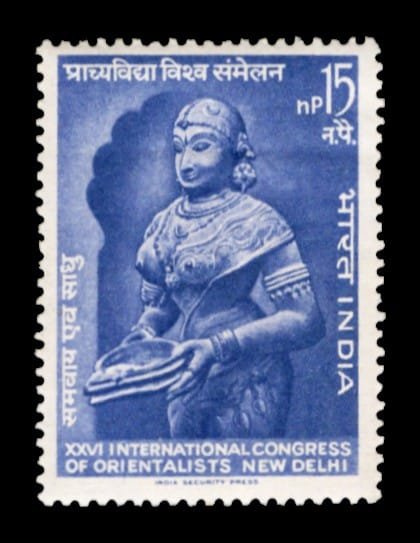
XXVI International Congress of Orientalists, New Delhi
Sg:IN 479
15 nP. Deep Ultramarine.
comb 13 x 13½
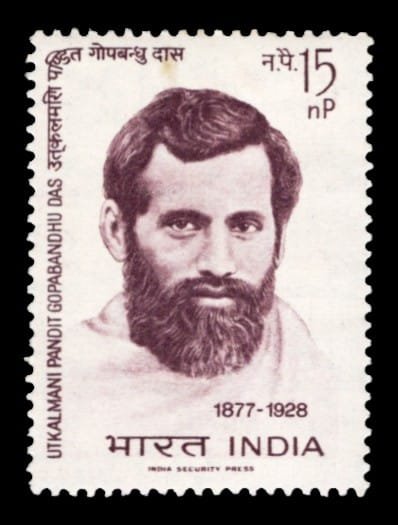
Gopabandhu Das (1877-1928)
Sg:IN 480
15 nP. Deep purple. comb 13 x 13½
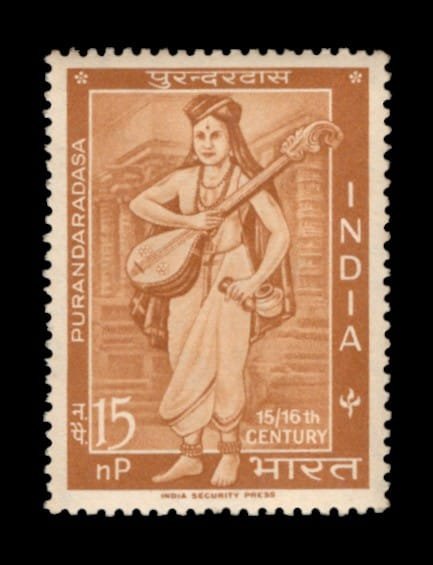
400th Death Anniversary of Purandaradasa (1484 – 1565)
Sg:IN 481
15 nP. Light brown. comb 13 x 13½
67th Birth Anniversary of Subhas Chandra Bose
Commemorative, Photogravure, Securities Printing Press (Nashik), Wmk Ashokan Capital (multiple)
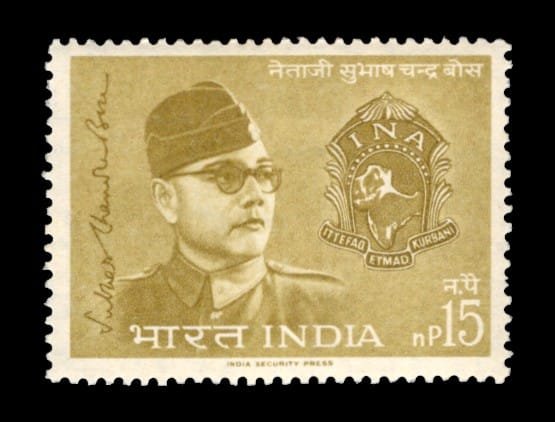
Subhas Chandra Bose (1847-1945) and INA Badge
Sg:IN 482
15 nP. Yellow bistre. comb 13
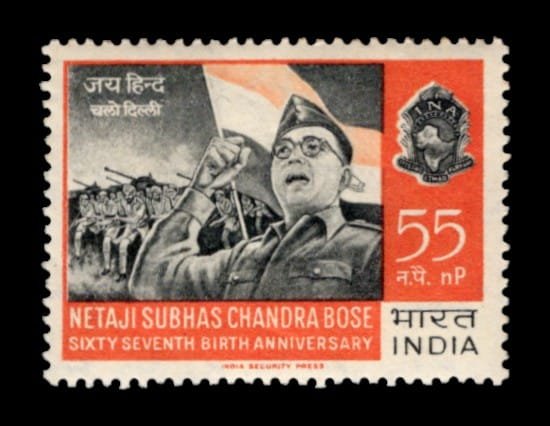
Subhas Chandra Bose (1847-1945) and Indian National Army
Sg:IN 483
55 nP. Multicolour. comb 13
Subhas Chandra Bose (1897–1945) was a prominent figure in India’s struggle for independence, known for his uncompromising stance against British rule and his efforts to secure freedom through international alliances. A former leader of the Indian National Congress who later broke away due to ideological differences, Bose founded the Forward Bloc and led the Indian National Army during the Second World War. His leadership of the Provisional Government of Free India and his mobilization of Indian prisoners of war and expatriates in Southeast Asia gave a militant dimension to the independence movement. Revered as “Netaji,” Bose became a symbol of patriotism, sacrifice, and defiance, and his legacy remained deeply influential in post-independence India.
In 1964, the Government of India issued commemorative postage stamps to mark the 67th birth anniversary of Subhas Chandra Bose, reflecting his enduring national significance. Released through India Post, these stamps typically featured a formal portrait of Bose, often in military attire, emphasizing his role as a leader of the Indian National Army. The design and issuance of such stamps formed part of a broader effort in the early decades after independence to honor key figures of the freedom struggle and to cultivate public memory through everyday objects. Circulating widely across the country, the stamps served not only as instruments of postal communication but also as symbolic reminders of Bose’s contribution to India’s independence and the diverse paths taken in achieving it.
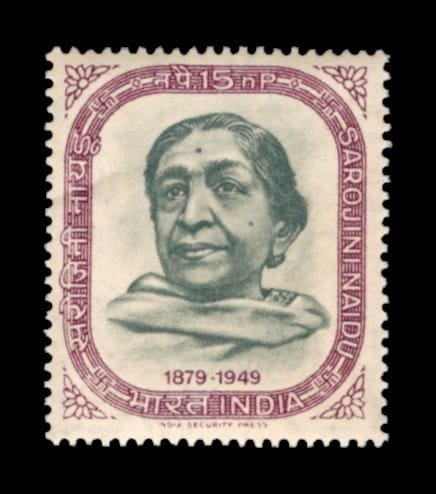
85th Birth Anniversary of Sarojini Naidu (1879-1949)
Sg:IN 484
15 nP. Grey green | Purple. comb 14
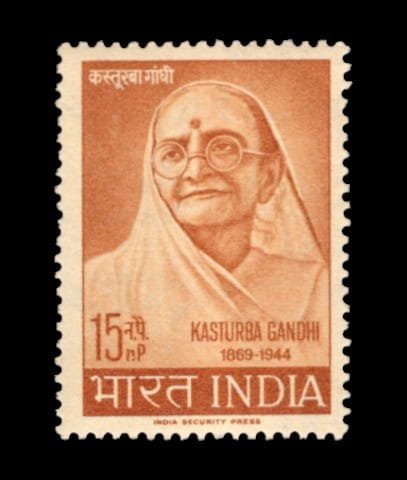
20th Death Anniversary of Kasturba Gandhi (1869-1944)
Sg:IN 485
15 nP. Orange brown. comb 14 x 13½
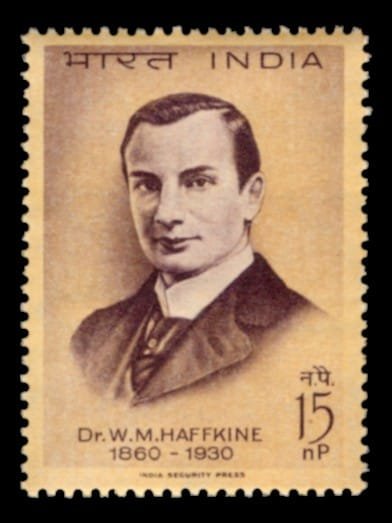
Waldemar M.Haffkine (1860-1930)
Sg:IN 486
15 nP. Purple brown. comb 13
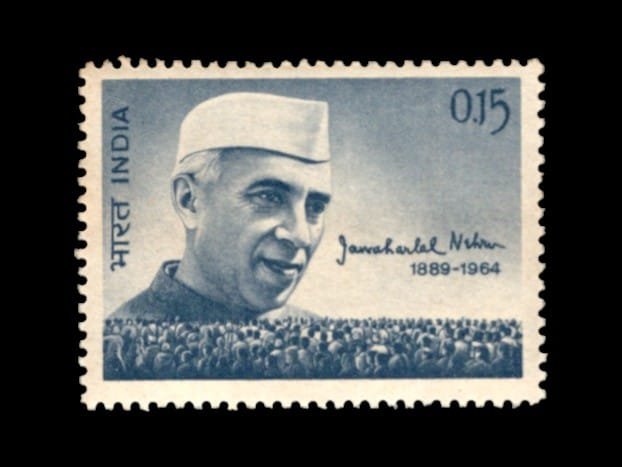
Mourning of Jawaharlal Nehru (1889-1964)
Sg:IN 487
15 nP. Dark blue grey . comb 13½ x 13
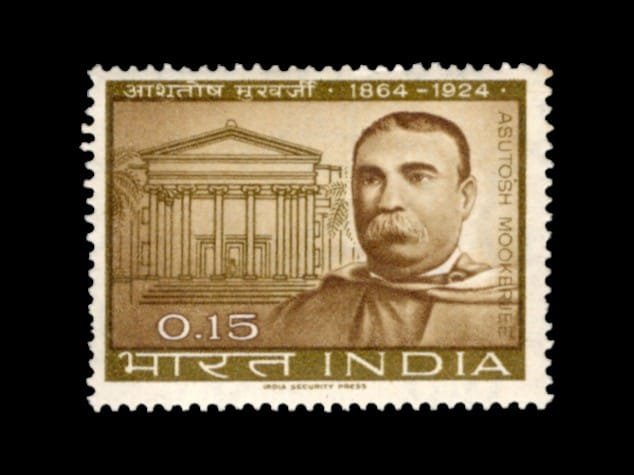
Birth Centenary of Sir Asutosh Mookerjee (1864-1924)
Sg:IN 488
15 nP. Bistre brown | Yellow olive. comb 13½ x 13
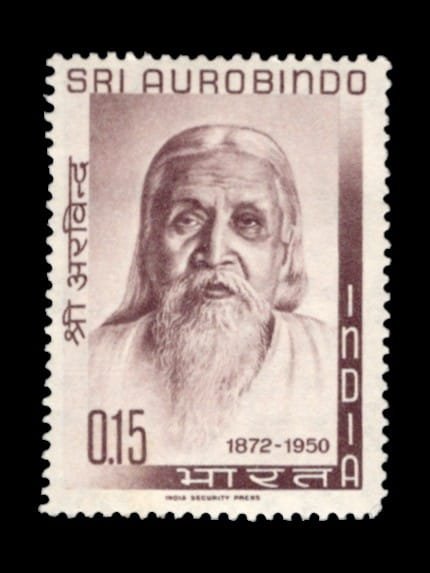
92nd Birth Anniversary of Sri Aurobindo Ghose (1872-1950)
Sg:IN 489
15 nP. Dull purple. comb 13½ x 13
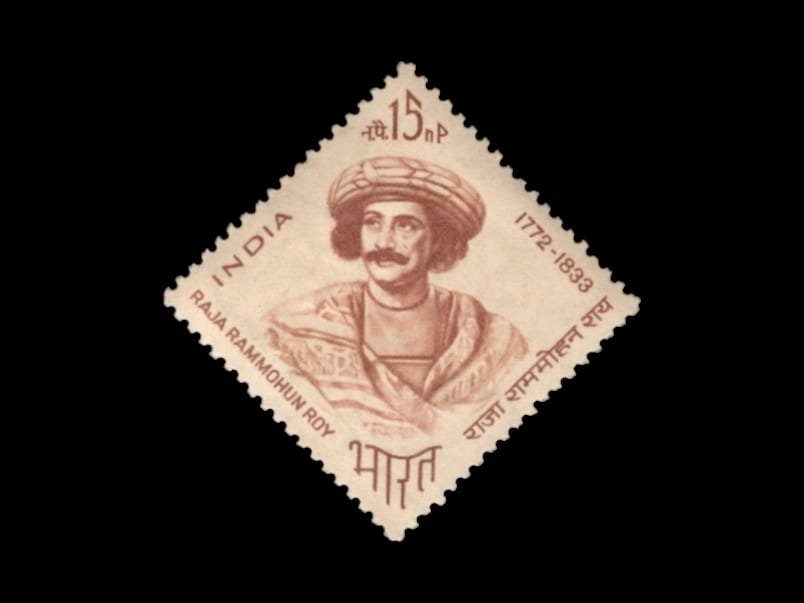
Raja Ram Mohan Roy (1772-1833)
Sg:IN 490
15 nP. Brown. comb 13 x 13½
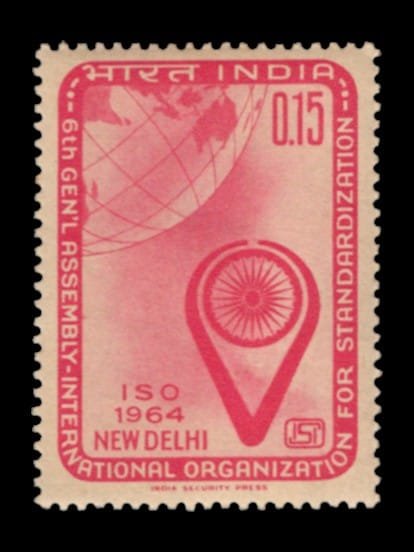
6th International Organisation for Standardisation Assembly
Sg:IN 491
15 nP. Carmine. comb 13 x 13½
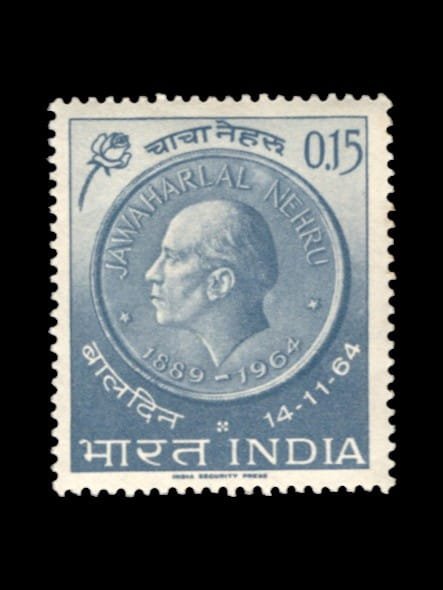
Children's Day 1964
Sg:IN 492
15 nP. Slate. comb 14 x 13½
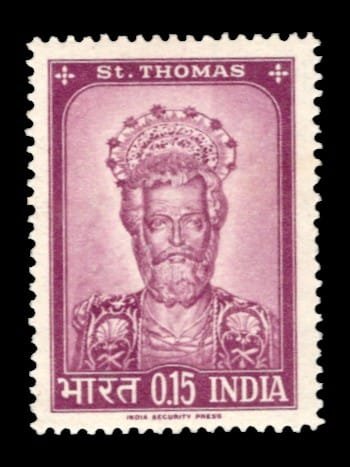
St. Thomas Commemoration and Visit of Pope Paul VI
Sg:IN 493
15 nP. Reddish purple. comb 14 x 13½
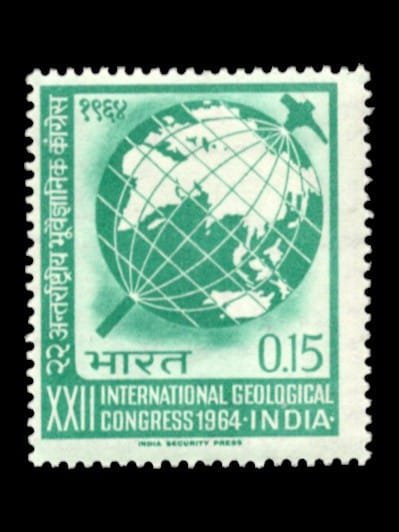
22nd International Geological Congress
Sg:IN 494
15 nP. Blue green. comb 14 x 13½
All stamp images and content © PhilatelyLife